One-to-one, workshops, groups and talks
Grieving over a loss is natural. Yet sometimes we don’t know how to move forward or where to go to with our thoughts and feelings. Life can feel lonely, confused, hopeless, and overwhelming.
Others may tell us how we should feel or what we should do – or we might tell ourselves how we should grieve. Yet grief doesn’t follow rules, and it’s okay not to have all the answers.
I support people who have experienced a loss or losses, no matter what kind of loss or when it happened. My father died when I was three months old, but only much later in life I started to become aware of my grief and the impact it had, and still has, on my life.
Some grief couldn’t be felt earlier.
We can grieve a loss that is still happening or is one that is yet to come. We can grieve the death of loved ones or beloved pets, ruptures in relationships, the loss of homes, countries, jobs, physical or mental abilities, dreams, futures, and what never happened but was deeply needed or longed for…
Sometimes, an experience in the present can touch a loss from the past that didn’t get the attention it needed at the time. And a past loss can affect our present life more than we might realise.
Grief has many layers and aspects, and each of us has our own timing and ways of recognizing and getting to know our grieving parts.
Welcome on my page about grief and grief work, not having said goodbye, my story, the heartening method Internal Family Systems and the group ‘A Gentle Space For Grief’ .
To read what others say about me please go to Testimonials.
Anja Hilkemeijer
Association for Support with Grief and Loss – Málaga Spain

Not having said goodbye – My story – Internal Family Systems
There are many things that could bother you, affect you, or ask your attention…
* You don’t understand what is happening to you. You try to figure it out.
* You feel overwhelmed.
* You haven’t said goodbye or the way you wanted.
* You hold feelings of regret, guilt or shame. You walk around with anger, frustration or blame.
* You think you should be over it by now. You are afraid other people get bored by your story, you don’t want to bother them.
* You are afraid to forget your loved one. Moments of joy feel as a betrayal.
* You don’t want to show others your pain and what is really going on inside you. You don’t want them to feel pity for you. You sense they prefer you to move on, to be strong. You want to be strong but it doesn’t feel like that.
* You wonder if you grieve in the right way. You think you should do better.
* You experience physical pains and can’t find a medical explanation.
These thoughts, feelings and physical experiences are common. If you recognise one or maybe some of them, you are not the only one.
You might recognise the urge to fix your grief, to get over it, or to supress it. I understand because grief can be so painful, unsettling and tiring. You can feel ashamed of what you experience. Or feel so much anger, blame or jealousy.
Grief is not something we can fix. Yet, we can give attention to those grieving parts, ‘listen’ to them with love and compassion. There is a way to live our lives with more peace of mind and body, where we honour our grief in all its aspects.
* * *
If you would like to have a chat or share your story, please contact me:
anja@livingafterloss.es
Would like to be informed about my meetings, groups, talks and articles about grief and loss? Please join my mailing list: Subscribe to Mailing List Living After Loss
Still time to say goodbye
You haven’t said goodbye? Or not how you wanted? There are things you regret? Or you still walk around with questions you didn’t ask? You are sad or angry by what your beloved did?
A source of deep pain, worry and regret for many.
There is still time to say goodbye. To take the time and space to express what you wanted to express. To feel the connection, the bond. For me and for many others that is healing and heartening.
Because the relationship with your loved one is not gone. The connection remains. The love remains. You can heal that bond when needed, you can deepen it. It can become a source of resilience, support and even joy.
Saying goodbye is a closure and an opening. A closure: you can release what is not needed anymore. An opening: it creates space to honour your loved one, for grateful memories and more peace of body and mind.
I have experienced this myself, by saying goodbye to my father and my sister who both died when I was too young to remember them. See My Story below.
(See also You cannot grieve over a father you didn’t know)
My Story
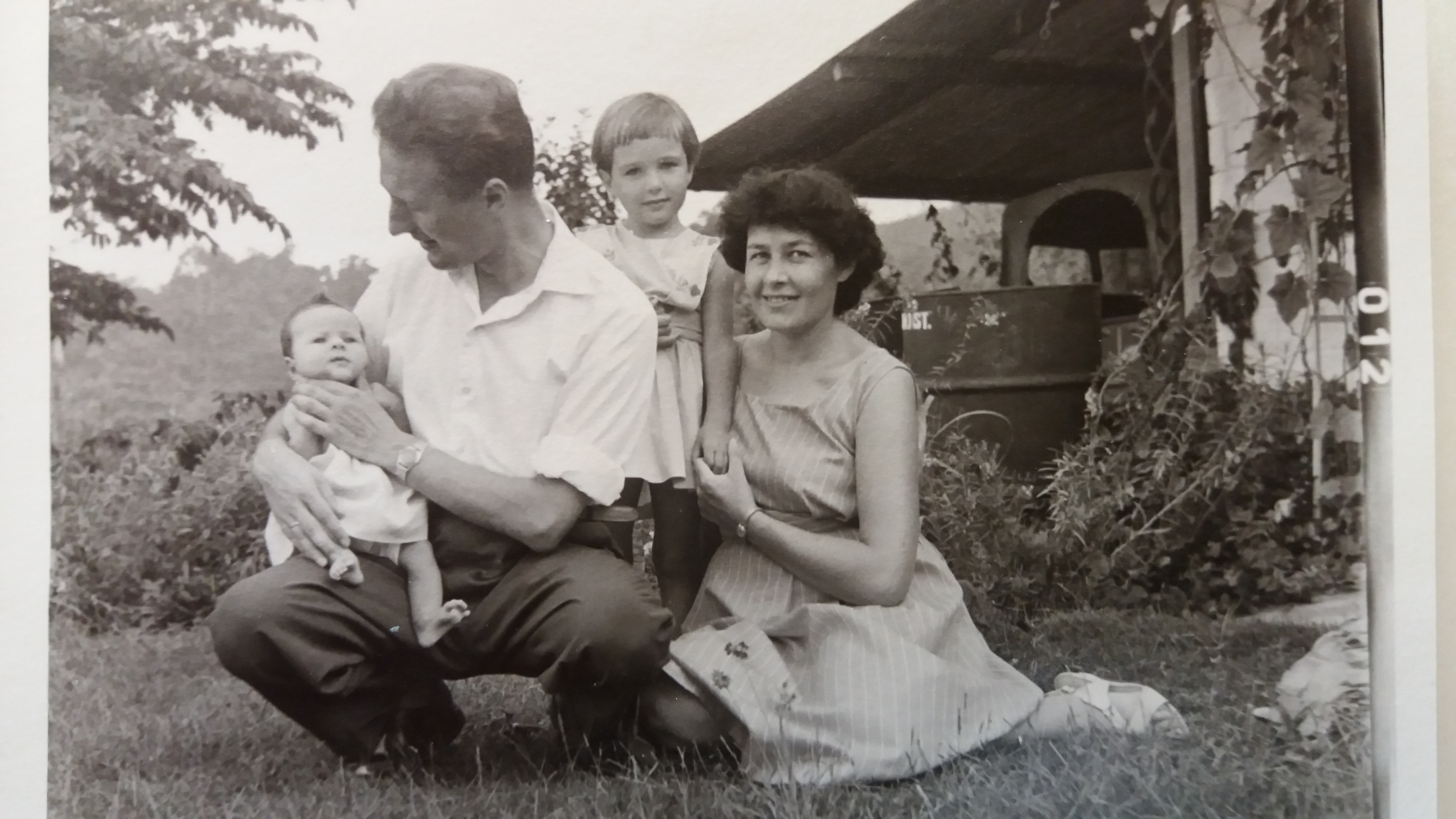
My life started happily. My father and mother were very grateful to welcome their second child, this chubby healthy baby, born in the summer of 1961.
Who could foreseen that within a few years everything would have changed?
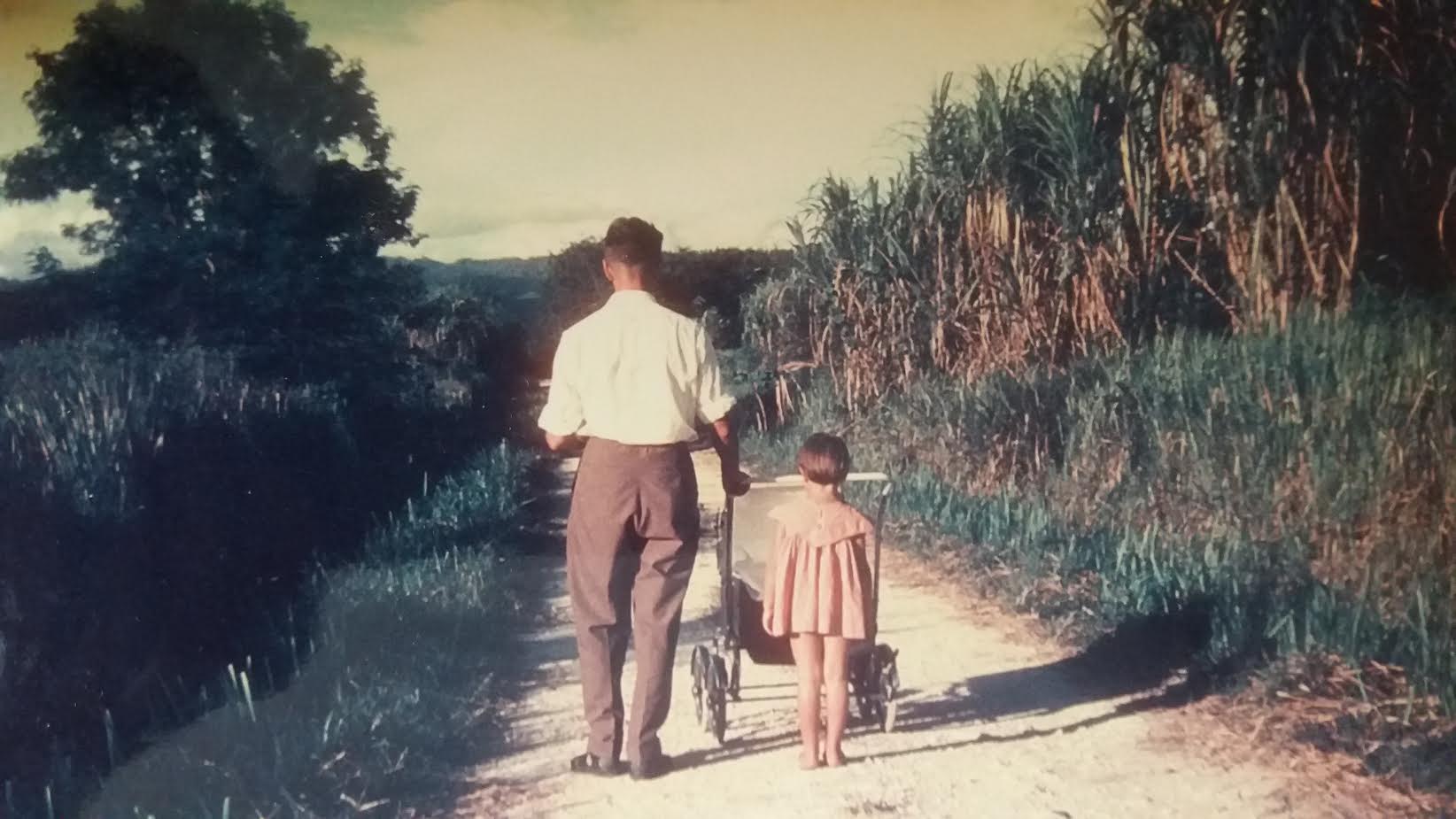
My father and sister died when I was still very young. I have no memories of them. I don’t know how they talked, walked, laughed, felt… nothing.
But I had always thought that their absence didn’t affect my life too much. I was far too young, weren’t’ I?
That changed twelve years ago. My mother became seriously ill and died from cancer. I grieved over my mother’s illness and death. A natural reaction and more so: expected. What I had not foreseen was that her death activated buried experiences – the losses of my father and sister.
Fortunately I studied at the Centre of Humanist Psychology in Malaga at that time. I say fortunately because the psychologists there guided me in a very heartening way. They encouraged me to say what I wanted to say to my mother when she was still alive. To say what I had on my mind and heart but never expressed.
I am very happy to be able to look back on a warm and loving final period with my mother. Moreover, I was very fortunate that she died in my arms.
The gift of grief work
I was unable to say goodbye to my father and sister, but I found a way to express my feelings, to say what I wanted to, and to ask the questions that had always been on my mind. I could not have foreseen how much of a difference that would make. The profound grief work at the Centre of Humanist Psychology made this possible. I call it the gift of grief work.
The grief work was a closure AND an opening for me. I began to feel the loving bond between my father, my sister and me. A bond that was, is and always will be. A bond that supports me. I could feel gratitude for who they were and what we shared.
Inspired by the heartening and encouraging grief work of the Centre of Humanist Psychology and after I attended their grief course as a co-therapist, I created the Association for Support with Grief and Loss – Malaga.
Would like to be informed about my meetings and articles about grief and loss? Please join my mailing list: Subscribe to Mailing List Living After Loss
Saying goodbye is not only a closure; it can be an opening too.
It opens the a way to connect and heal the bond with you loved one. To deepen that bond. It can become a source of support and even joy.
The relationship with a loved one doesn’t end when they die; it continues in our heart.
Some people feel that their love and healing is received at the other side.
But what if you hold feelings of regret, guilt or shame? What if you have lost hope?
You regret not having said goodbye. Or not in the way you would have wanted.
You wished you had done things differently.
Feelings and thoughts keep troubling you.
You have not said sorry.
You have not said thank you.
You were not able to resolve misunderstandings.
You have not said how your were hurt.
There was no reconciliation.
You are afraid you will forget your loved one.
You don’t know how to move forward. You feel stuck.
I would like to say: There is a way out of these troubling thoughts and feelings.
To live our life with more peace of mind, joy and gratefulness.
How Internal Family Systems helps with grief
When we grieve, we might experience feelings we didn’t know we had, or not as intense. Our body or parts of our body ache. We might act in a way we never did before. We might feel numb, or overwhelmed. We try but cannot comprehend what has happened.
There are many ways to react on a significant loss. Not only sadness and crying as most people think of. We react on an emotional, physical, mental, behavioural and spiritual way.
To mention some responses that could come up: numbness, disbelief, fear, anger, guilt, shame, protest, hopelessness, helplessness, jealousy, loneliness, exhaustion, lack of concentration, pressure on the chest, heart pain, knot on the stomach, problems with sleeping, overuse of food and/or drugs, staying busy, working hard, shopping, sleeping, staying in bed, thinking over and over “what if…”, and sometimes relief and liberation.
All these reaction are normal human reactions. And there are many more.
What to do with all these reactions? How to cope? How to live on? Internal Family Systems (IFS) provides a heartening method and a view on life that helps with grief without being overwhelmed. It is a safe, encouraging and creative way to get to know our needs and give ourselves what we need.
About grieving
Grief is not something we can fix, or solve as if it were a problem. It stays with us, sometimes coming up in unexpected ways, often in waves. It may change over time, its presence can shape us, teaching us new ways to live with it. Grief doesn’t disappear, but over time, we may learn to hold it differently, finding space for both pain and healing.
Trying to get over grief or supress it doesn’t work in the long run. Instead, we can listen to the signals of our body, acknowledge our thoughts, allow our emotions – when we are ready, with gentleness. By getting to know these parts of ourselves, we can find a way to heal if needed. This allows us to live our life with greater peace of mind and body, honouring our grief in all its aspects.
Inspired by the psychotherapist and writer Britt Frank: Grieving opens the way to finding our inner home—a place where you feel safe, loved, and cared for. Grief invites you to discover and nurture this inner refuge, sharing the care and compassion your inner parts have longed for.
Group meetings ‘A Gentle Space for Grief’
I facilitate a group A Gentle Space For Grief – a welcoming place to meet our inner parts around grief and loss.
These are IFS-inspired meetings. There is no need to be familiar with IFS. If you are interested, you are welcome!
Would you like to explore Internal Family Systems yourself? Richard Schwartz, the founder of IFS, has written several introductory books, including No Bad Parts, Healing Trauma, and Restore Wholeness with the Internal Family Systems. This book explains the model clearly and includes exercises you can do on your own. Many people find the audiobook format helpful for completing the exercises.
Would you like to be informed about my groups, other activities, and articles about grief? Please join my mailing list: Subscribe to Mailing List Living After Loss
 Steun bij Rouw - Support with Grief